PEAK Alpine Guide: Blizzards, Cold, Hot Spring and Route Tips
How to survive the Alpine in PEAK: blizzards and Cold, icicles, geysers and flash bulbs, the hot spring capybaras, food, variants and the Alpine badges.
FAQ
How do you stay warm in the Alpine?
Where is the hot spring?
How often does the Alpine appear?
What are the Alpine badges?
Does huddling work during a blizzard?
Can I see which Alpine variant I will get before the run?
Overview
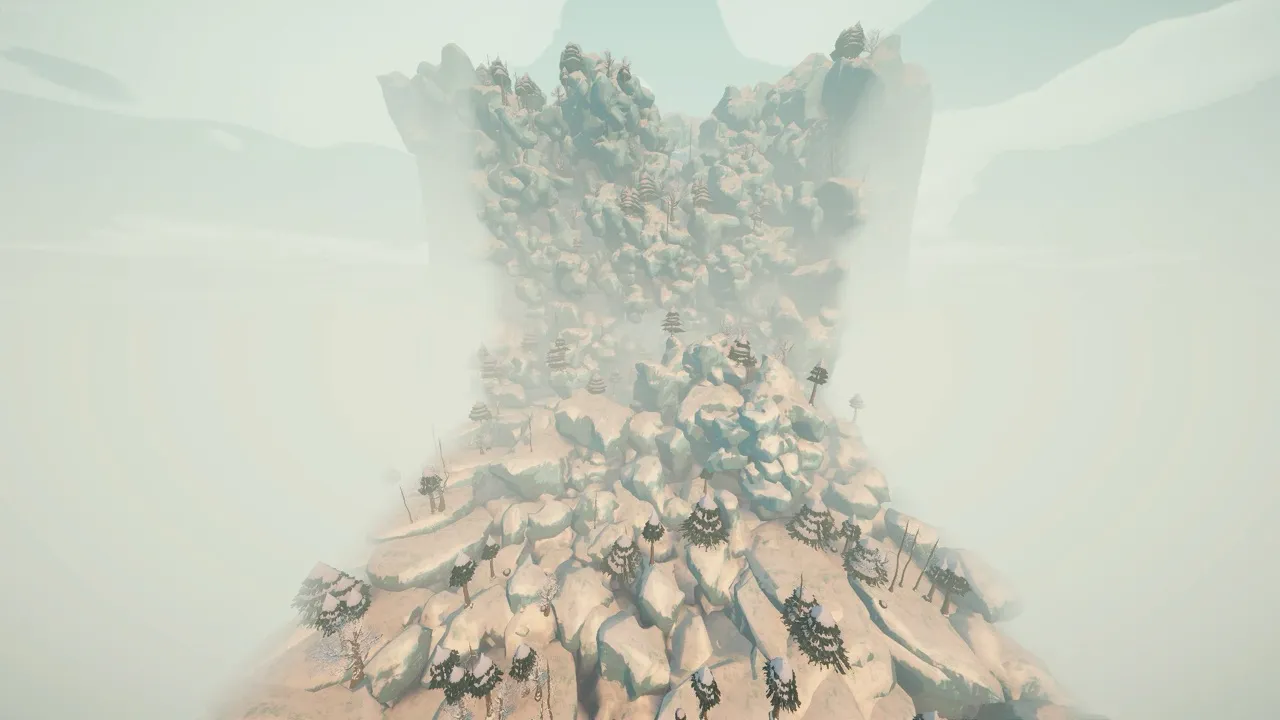
The Alpine in its default layout · PEAK Wiki (CC BY-SA 4.0)

The Alpine is one of the two options for region three (the other is the Mesa). It is a snowy, hilly climb up a cliffside full of caves. In the current map pool it appears on 105 of 208 days; today’s lineup shows whether today is one of them.
| Alpine | |
|---|---|
| Region | 3 (instead of the Mesa) |
| Main status | Cold |
| Badges | Alpinist, Bundled Up |
| Capybaras | 3, in the hot spring |
| Ancient Statue | 1, at the top by the campfire |
Hazards
A geyser erupting · PEAK Wiki (CC BY-SA 4.0)

| Hazard | What it does | How to handle it |
|---|---|---|
| Blizzard | Rapid Cold, poor visibility, light wind push across almost the whole biome | Hide in deep caves or below the surface until it passes |
| Icicles | Shake and fall shortly after you climb on them | Keep moving on cave ceilings; never rest on them |
| Ice rocks | Inflict Cold; climbing them inflicts much more than standing | Route around large ice faces |
| Flash bulbs | Cave flowers that fog the screen of nearby scouts | Do not brush past them on a hard climb |
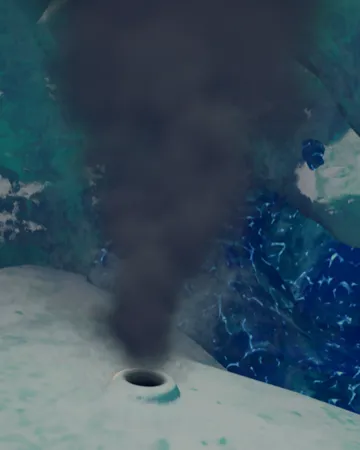
| Geysers | Erupt near scouts, inflict Heat and launch you | Listen for the steam build-up and screen shake, then step away |
| Napberry | Makes nearby scouts drowsy until picked | Pick it or keep your distance |
Rusty pitons stick out of the cave walls. They work like a normal piton but break after six seconds of holding.
Variants
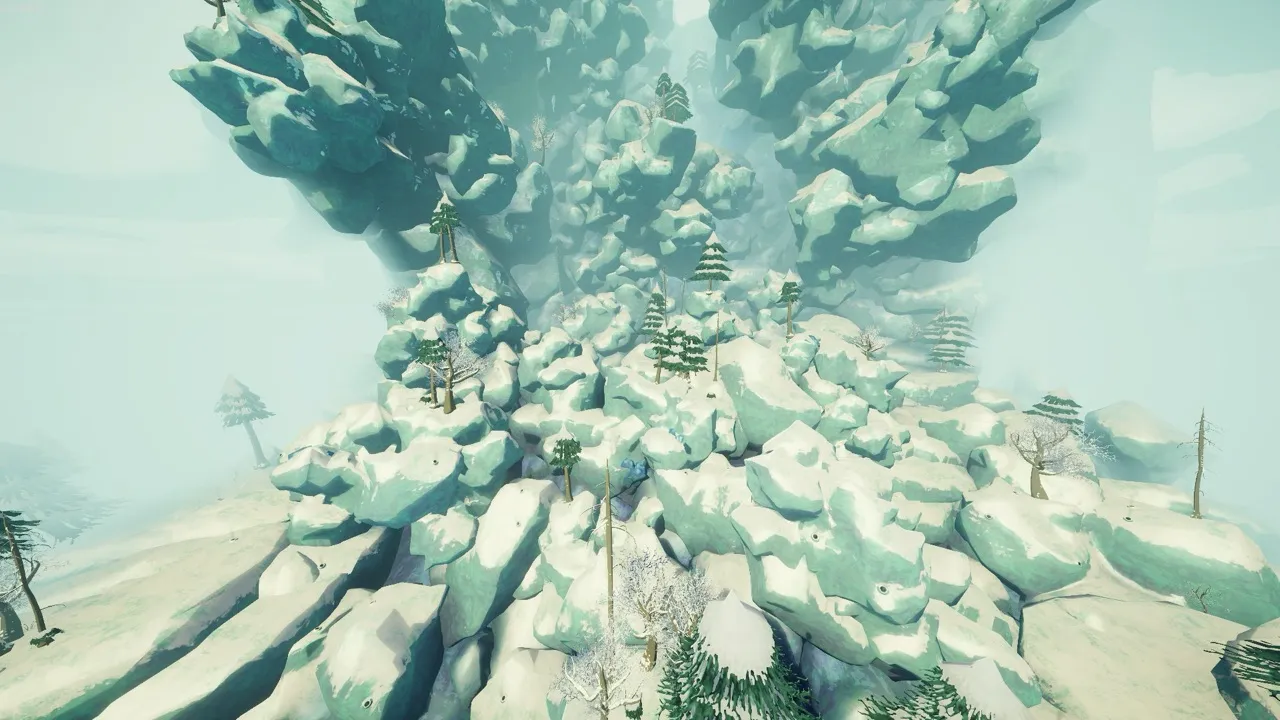
The Geyser Hell variant · PEAK Wiki (CC BY-SA 4.0)

Each Alpine has one of four equally likely layouts: the default, Geyser Hell, Lava (with lava tubes) and Spikes (giant ice spikes). The variant is fixed for the day, so today’s Alpine map tells you what you are getting.
A route through the Alpine
The Alpine rewards climbing in short legs between shelters rather than one long push.
- At the bottom, look up. Apart from the summit campfire, the hot spring is the only thing in the biome that gives off steam. Spot it from the base, or with Binoculars, and you know where your checkpoint is.
- Lower half: cave to cave. The cliff is riddled with caves, and many have Winterberry trees inside. Climb in the open while the weather is calm, and always know which cave you will run to if the wind picks up.
- Upper half: the hot spring. On our maps the spring sits in the upper half of the climb, and most of the Alpine’s ancient luggage is in the same band. Open nearby boxes from there, warm up, and eat.
- The top. The campfire and the Ancient Statue stand together at the summit. If a teammate froze on the way, carry on and revive them at the statue rather than climbing back down.
Managing Cold
Cold fills part of your stamina bar like any status; if statuses fill the whole bar, you pass out. It fades on its own once nothing adds more. To shed it faster:
- Huddle. Scouts within about three metres of each other lose Cold faster, but only if they have taken no Cold in the last three seconds. Huddle inside shelter, not in the storm.
- Heat Packs (common in luggage here) and the Crash Site Lantern, which lasts only 60 seconds of use.
- Fire. A lit campfire or portable stove removes Cold.
- Geysers. Standing near one warms you; just not on top of it.
- Scorchberries from the Tropics. Heat and Cold cancel out, so one eaten before an exposed stretch is a buffer.
- Emergencies: a Cure-All or Scout’s Tenacity clears Cold.
When a blizzard hits
- Leave the open face for the nearest deep cave, the hot spring or any spot below the surface.
- Choose shelter that fits the whole group, then huddle once the Cold stops rising.
- Do not climb ice rocks to get there; going around costs far less Cold.
- Wait. Blizzards pass, and visibility returns with them.
Common ways to die
- Passing out mid-wall when a blizzard fills the bar with Cold.
- Resting on a cave ceiling until the icicle drops.
- Holding a rusty piton past six seconds.
- Geyser launches off a ledge; on Ascent 1+ fall damage is doubled.
- Flash bulbs and Napberries: blind or drowsy mid-climb, an easy wall becomes a fall.
The hot spring
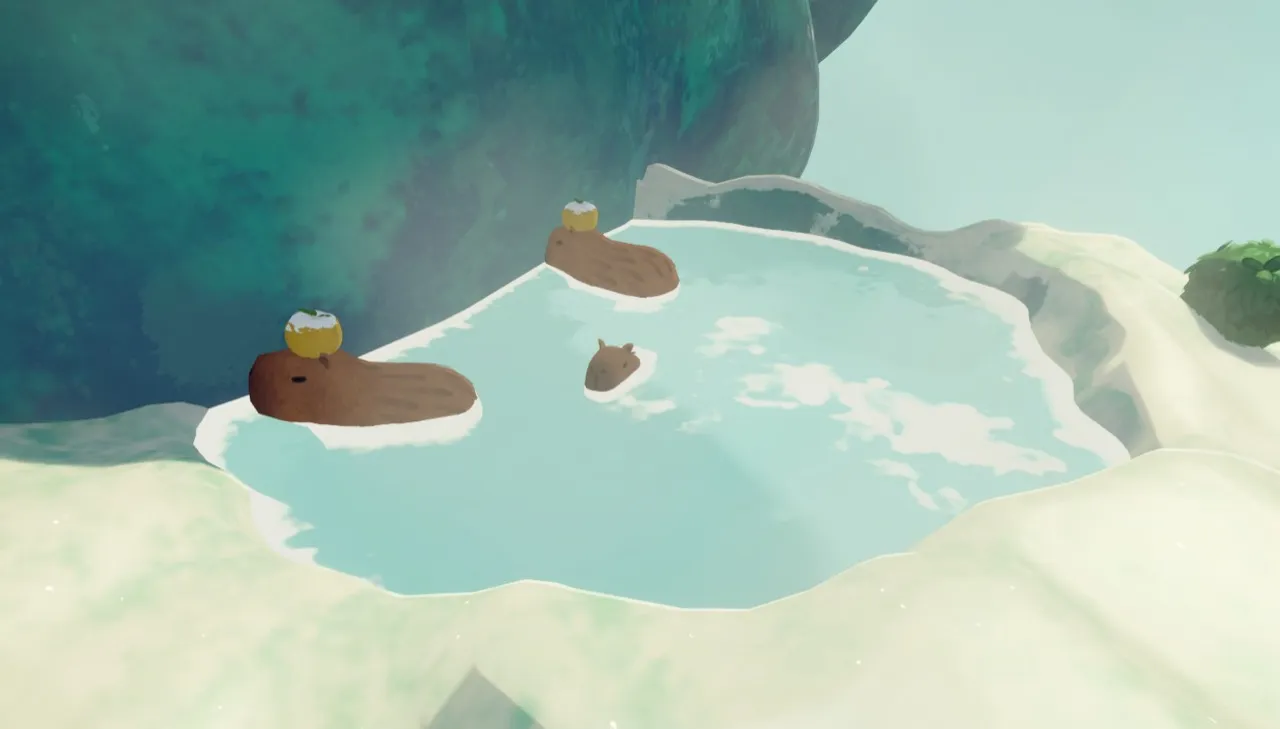
Capybaras in the hot spring · PEAK Wiki (CC BY-SA 4.0)

Higher up the cliff there is a steaming pool with three capybaras. Standing in it removes Cold and protects you from blizzards. One to three of the capybaras carry a Yellow Winterberry on their heads, one of the four ingredients for the Gourmand badge. Playing the Bugle for a capybara earns Animal Serenading.
In the current 208-island pool there are two or three capybaras on the map every day: three in the Alpine hot spring, or two at the Mesa oasis on Mesa days. Today’s capybaras shows the exact pool.
Food and items
- Orange Winterberry and Yellow Winterberry (the yellow one gives bonus stamina and is rare on trees).
- Napberry, which makes you drowsy.
- Shelf Fungus, Remedy Fungus, Warp Fungus and Magic Beans.
- Snowballs, left over from the holiday event.
- Luggage here often has Heat Packs.
Luggage counts are moderate: about 18 regular, 9 big, 1.7 explorer’s, 1.7 ancient and 1.2 clown luggage per Alpine. See the luggage types guide for how that compares.
Using the Alpine today page
Today’s Alpine map says whether the Alpine is on today’s island and, if not, the next day it appears. It counts every box, capybara, statue and amulet in the biome, and each row links to that spot on the full-screen map. Switch to the side view to tell a box tucked inside a cave from one on the open face: in a blizzard, the cave box is the one worth the detour.
Tips
- Ascent 5+: nights add Cold on top of blizzards, so the hot spring is the safest place to wait out a night. See Ascents.
- Bundled Up: stay under 20% Cold for the whole biome. Move between caves during calm spells and use the hot spring as a checkpoint.
Badges
| Badge | Requirement |
|---|---|
| Alpinist | Climb past the Alpine |
| Bundled Up | Climb past the Alpine without ever having more than 20% Cold |
| Animal Serenading | Play the Bugle for a capybara |
For every other badge, see the full badge list.
Related Articles
guides
PEAK Gourmand Badge: Four Foods and Where to Find Them
Cook and eat Half-Coconut, Honeycomb, Yellow Winterberry and Egg in one escape — where each Gourmand food spawns, plus Mesa oasis clip tips.
biomes
PEAK Caldera and Kiln Guide: Lava, Condors and the Final Climb
How to cross the Caldera lava lake and climb the Kiln in PEAK: rising lava, eruptions, condors, petrifying stones, gear to save, and how the run ends.
biomes
PEAK Gloom and Citadel Guide: Belltowers, Traps and the Early Worm
How to cross the Gloom swamp and climb the Citadel in PEAK: sleepy gloom, frogs, the Big Ghost, belltowers, every trap type, and the five badges of this route.
Was this helpful?
Thanks for the feedback!