PEAK Guides
PEAK Gourmand Badge: Four Foods and Where to Find Them
Cook and eat Half-Coconut, Honeycomb, Yellow Winterberry and Egg in one escape — where each Gourmand food spawns, plus Mesa oasis clip tips.
10/18/2026 2.6.b Last updated: 10/18/2026 2 min read
FAQ
What do I need for the Gourmand badge?
In one expedition, cook and eat a Half-Coconut, a Honeycomb, a Yellow Winterberry and an Egg, then escape the island. Raw food does not count.
Where is the Yellow Winterberry?
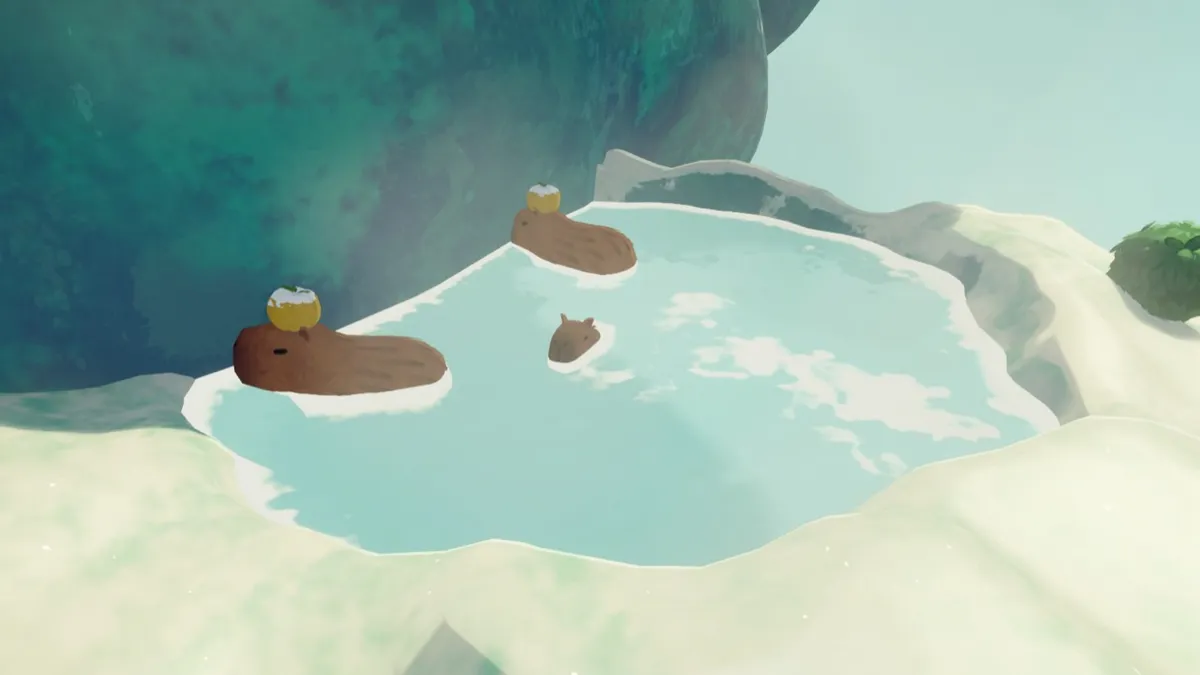
On a capybara's head in the Alpine hot spring or the Mesa oasis. Every island has one of those biomes, so there is always at least one berry. Use today's critters page to jump to the pool.
What if the Mesa oasis is clipped inside rock?
Some Mesa days bury the oasis geometry. Ping the water first to confirm it is real, then approach from the open side or drop in from above. If you still cannot reach a capybara, try another Mesa day from the rotation page — the layout changes with the island.
Do I need a Tropics day for Honeycomb?
Tropics beehives are the reliable source (four Honeycombs per hive). Honeycomb can also appear in Roots redwood stumps, but a Tropics day plus today's beehive markers is the clean route.
The four cooked foods
| Food | Where to get it | Map tip |
|---|---|---|
| Half-Coconut | Shore palms and Tropics trees; split a coconut, cook one half | Always available early |
| Honeycomb | Break a Tropics beehive (four combs); cook before eating | Today’s beehives on Tropics days |
| Yellow Winterberry | Capybara head in Alpine hot spring or Mesa oasis | Today’s capybaras |
| Egg | Bird nests on ledges and trees along the climb | Watch for nests while you loot |
Rewards: Aggro Mouth and Aggro Eyes. Full badge list: badges guide.
A practical one-run plan
- Pick the day. Tropics in region two makes Honeycomb easy. Alpine or Mesa both supply the Yellow Winterberry via capybaras — check today’s critters.
- Coconut early. Crack one on the Shore or in the Tropics and cook a half at the first campfire you trust.
- Hive safely. Carry the hive away from the climb line, throw it to break, wait out the bees, cook a comb.
- Berry at the pool. Steam (Alpine) or cold water (Mesa) marks the capybaras. In the Mesa, ping mirages first; a real oasis keeps the ping.
- Egg when you see a nest. Do not backtrack the whole mountain for one nest if you already passed several.
- Eat cooked, then escape. The badge checks the cooked set on a successful escape.
Common stuck points
- Oasis in the rock. Community reports sometimes place the Mesa oasis flush with cliff mesh. Approach from above or the open rim; if the berry is unreachable that seed, swap to another Mesa day on the biome rotation rather than burning hours on one geometry bug.
- Eating raw. Cooking is required for all four.
- Splitting the run. Everything must be in the same expedition that escapes.
- Skipping the map. Beehive and capybara pins save the longest detours — open them before you load in.
Related pages
- Critters guide — capybaras, beehives, Early Worm, antlions
- Tropics biome — hive density and Trailblazer
- Alpine / Mesa — hot spring vs oasis
- Stamina and food — cooking basics
Related Articles
guides
PEAK Bing Bong Badge: Where He Spawns and How to Escape With Him
Find Bing Bong on today’s Shore map, keep the plush safe in a Backpack, and escape for the Bing Bong badge — Propeller Hat reward and lobby-wide unlock rules.
biomes
PEAK Alpine Guide: Blizzards, Cold, Hot Spring and Route Tips
How to survive the Alpine in PEAK: blizzards and Cold, icicles, geysers and flash bulbs, the hot spring capybaras, food, variants and the Alpine badges.
biomes
PEAK Tropics Guide: Rain, Vines, Spore Bombs, Beehives and Big Trees
How to climb the Tropics in PEAK: rain and wet rock, vines, spore bombs, poison ivy, ticks, beehives and honeycomb, the seven variants, luggage counts and badges.
Was this helpful?
Thanks for the feedback!