PEAK Tropics Guide: Rain, Vines, Spore Bombs, Beehives and Big Trees
How to climb the Tropics in PEAK: rain and wet rock, vines, spore bombs, poison ivy, ticks, beehives and honeycomb, the seven variants, luggage counts and badges.

FAQ
What does rain do in the Tropics?
How do you get honey from a beehive safely?
How often does the Tropics appear?
Which badges are tied to the Tropics?
Overview
The Tropics is a jungle cliff full of trees, hanging vines, giant roots and waterfalls. It is one of the two options for region two, after the Shore and instead of the Roots, and it leads on to the Alpine or the Mesa. In the current pool it appears on 104 of 208 days; today’s lineup tells you whether today is one of them.
| Tropics | |
|---|---|
| Region | 2 (instead of the Roots) |
| Main status | Poison |
| Weather | Rain |
| Badges | Trailblazer, Arborist |
| Beehives | About 3.5 per Tropics day (1 to 5) |
| Ancient Statue | 1 |
Lighting the campfire at the top lifts the fog wall and gives every living scout Trailblazer. On Peak difficulty and above, the fog also starts rising through the Tropics, so you cannot take your time.
Terrain and route
Vines
Vines are the Tropics’ best feature. You can grab one like a rope for very little stamina, moving along it costs far less than climbing, and hanging still barely drains you at all. Two tricks worth learning:
- Hold interact while falling near a vine and you will catch it automatically. Catching a vine mid-air cancels your fall, so it can save you from a long drop.
- Like ropes, vines sometimes give a small upward boost for free when you grab them.
Trees
Big trees have thick trunks and wide crowns you can climb and stand on, and luggage sometimes sits right on top. Reaching the top of one earns Arborist. Willows are the opposite: their trunks are too thin to climb, which makes the Kingberries on them awkward to reach, but you can slide down a willow trunk to avoid fall damage. Beehives hang on willows too.
Giant ivy and waterfalls
Giant ivy roots weave in and out of the cliff. A few are safe to walk on; most are the thorny kind (see below). Waterfalls are harmless but knock you over for a couple of seconds if you touch them, and they hide the rock behind them. The fireflies are purely decorative.
Hazards
| Hazard | What it does | How to handle it |
|---|---|---|
| Rain | Wet surfaces: slower, costlier climbing, and you slide when you stop | Climb under cover or wait on a vine |
| Explosive spore bombs | Yellow with green spots; explode on contact and launch you | Climb around them or set them off with a thrown item |
| Poison spore bombs | Green with magenta spots; release a Poison cloud | Same as above; wait for the cloud to fade |
| Poison ivy | 2.5 Poison on touch | Look for purple spots on the leaves |
| Monstera | No Poison, but a 1% chance to pick up a tick | Check yourself after pushing through |
| Thorny giant ivy | Poison and a small knockback | Avoid, or use it as a quick stepping stone |
| Beehives | Bees chase you for 2.5 Poison per second | See the section below |
| Lava tubes (Lava variant) | Heavy Heat, Injury and knockback | Keep well clear |
Ticks
A tick slowly fills your stamina bar with Poison, up to 50, and grows as it feeds. Either you or a teammate can pull it off, and the removed tick becomes food that restores 20 Hunger.
Variants
Seven layouts are equally likely: the default, Bombs (many more explosive spore bombs, yellow-tinted trees), Ivy (purple jungle, more poison plants), Lava (lava tubes), Pillars (more and taller rock pillars), Sky Jungle (floating islands, sometimes linked by giant ivy) and Thorny (far more thorny ivy). A purple-coloured jungle on its own is just cosmetic. Today’s Tropics map shows which layout you got.
Food and items
The Tropics is the best-stocked kitchen on the island:
- Coconuts, crispberries (yellow for stamina, green is poisonous) and Medicinal Root, as on the Shore.
- Scorchberry, which gives Heat. Useless here, but worth carrying into the Alpine to cancel Cold.
- Kingberries: purple is safe; yellow and green poison you. The green one restores 30 Hunger for 5 Poison, so it is usually still worth eating.
- Berrynanas on the vines: brown gives bonus stamina, pink is poisonous.
- Clusterberries on giant ivy: red heals Injury, yellow gives bonus stamina.
- Honeycomb from beehives, and ticks.
- The usual shrooms with their poisonous look-alikes, plus Chubby Shrooms.
- Natural items: Shelf Fungus, Remedy Fungus, Warp Fungus and Magic Beans.
With this many berry types in one place, the Tropics is the easiest region for Foraging (five different berries in one expedition).
Beehives
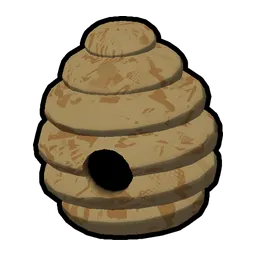
A beehive · PEAK Wiki (CC BY-SA 4.0)

The Tropics is the only biome with beehives. On our maps a Tropics day has about 3.5 hives, from 1 to 5. Get close or pick one up and the swarm chases you for 2.5 Poison per second.
The safe method is to throw the hive so it breaks, walk away until the bees settle, then come back for the four Honeycombs. If the hive does not break, the bees do not calm down. Each Honeycomb restores 10 Hunger and gives 50 bonus stamina; cooking adds more, and cooking the hive before you crack it cooks all four combs at once. A hive weighs 10 and cannot go in the Backpack. Today’s beehive locations mark every hive.
Luggage and markers
On our maps a Tropics day averages 16.9 regular luggage (up to 31) and 8.2 big luggage (up to 14). Luggage here often contains Antidotes, which is handy in a biome built around Poison.
| Box | Average per Tropics day | Most seen |
|---|---|---|
| Explorer’s luggage | 2.0 | 7 |
| Ancient luggage | 1.2 | 4 |
| Clown luggage | 0.6 | 2 |
Clown luggage turned up in the Tropics on 46 of its 104 days. Compare every region in the luggage types guide.
Each Tropics day holds one Scout amulet. Which of the four it is changes by island. Today’s amulets shows where they are.
The Ancient Statue

An Ancient Statue in the Tropics · PEAK Wiki (CC BY-SA 4.0)

Every Tropics day has exactly one Ancient Statue, near a campfire. Use it to revive everyone who is dead or unconscious (30 Hunger, +5 Curse each, +15 on Ascent 7), or, if the whole team is alive, to get a random mystical item. It only works once. The revive guide has the details, and today’s map marks where it stands.
Related badges
| Badge | Requirement |
|---|---|
| Trailblazer | Climb past the Tropics |
| Arborist | Reach the top of a really big tree |
| Gourmand | Escape after cooking and eating a Half-Coconut, Honeycomb, Yellow Winterberry and an Egg |
| Foraging | Eat 5 different berries in one expedition |
| Toxicology | Restore 200 total Poison with items (across runs) |
For every other badge, see the full badge list.
Tips
- Watch the sky. When rain starts, finish your move onto cover or a vine instead of pushing up a wet wall.
- Wait out rain on a vine. Idle stamina drain there is tiny, as long as you are not empty.
- Clear spore bombs from range. Throw an item at a bomb that blocks a narrow path.
- Pull ticks off early. The Poison keeps building until someone removes it.
- Pack Scorchberries for the Alpine. Their Heat cancels Cold.
- Cook Honeycomb for Gourmand at the Tropics campfire, then keep a Half-Coconut from the same trip.
Common mistakes
- Holding still on wet rock. You slide down, wasting stamina you will need later.
- Mistaking poison ivy for monstera. The poison kind has purple spots.
- Taking a beehive along. The bees follow you until the hive breaks or you get far enough away, stinging all the way.
- Trying to climb a willow. The trunk is too thin; go around.
- Panicking when you fall. Hold interact and let the nearest vine catch you.
- Ignoring thorny ivy as an option. Bouncing off it costs a little Poison but can get you past a wall you cannot climb.
Related Articles
guides
PEAK Gourmand Badge: Four Foods and Where to Find Them
Cook and eat Half-Coconut, Honeycomb, Yellow Winterberry and Egg in one escape — where each Gourmand food spawns, plus Mesa oasis clip tips.
biomes
PEAK Alpine Guide: Blizzards, Cold, Hot Spring and Route Tips
How to survive the Alpine in PEAK: blizzards and Cold, icicles, geysers and flash bulbs, the hot spring capybaras, food, variants and the Alpine badges.
biomes
PEAK Caldera and Kiln Guide: Lava, Condors and the Final Climb
How to cross the Caldera lava lake and climb the Kiln in PEAK: rising lava, eruptions, condors, petrifying stones, gear to save, and how the run ends.
Was this helpful?
Thanks for the feedback!